
Introduction
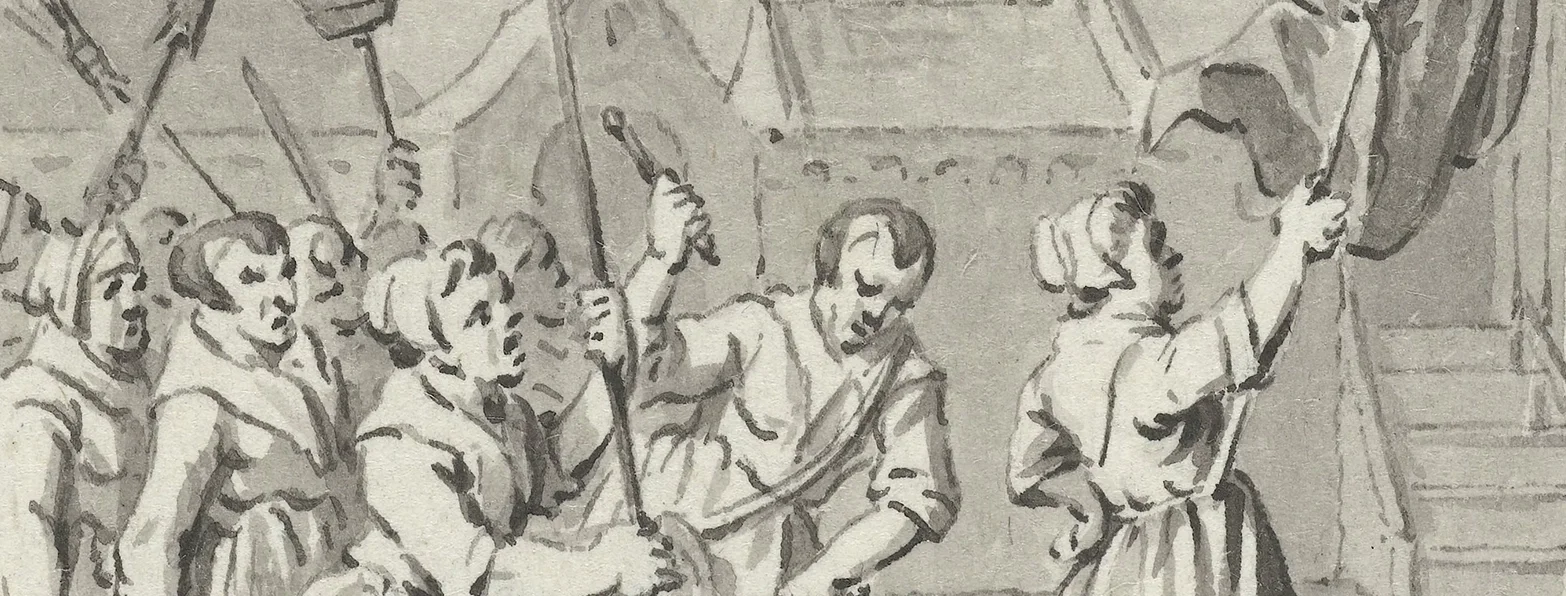
This project takes on two fundamental historical questions: How have ordinary men and women shaped politics before they had the right to vote? And how have power relations shaped archives, determining whose histories have been written, and whose have been silenced? It does so by focusing on food protests in Dutch, Italian, and Ottoman cities between 1550 and 1750, a period when climatic change caused by the Little Ice Age impacted food production.
Premodern protests have long been regarded as having paved the way toward political equality. Although food protests were arguably the most pervasive type of such actions, they are largely absent from this narrative. Often led by women, food protests have been assumed to be motivated by hunger rather than politics. The Daily Bread Project argues that this interpretation stems in part from archival silencing: contemporary authorities disregarded women as political actors, also in the production of archival sources. In turn, later historians, relying on these sources, mainly interpreted the involvement of women as an expression of their domestic roles, rather than a political action. By comparing early modern food protests across European and Ottoman cities, the Daily Bread Project seeks to uncover the power relations at play not only in the streets, but also in the archive and in the writing of history itself.
Funding & partners
The Daily Bread project is funded by a VICI grant from the Dutch Research Council (NWO) and supported by the UvA’s Faculty of Humanities and the Royal Netherlands Institute in Rome (KNIR).
